
How Many Restrooms Does a Farm Crew Need?
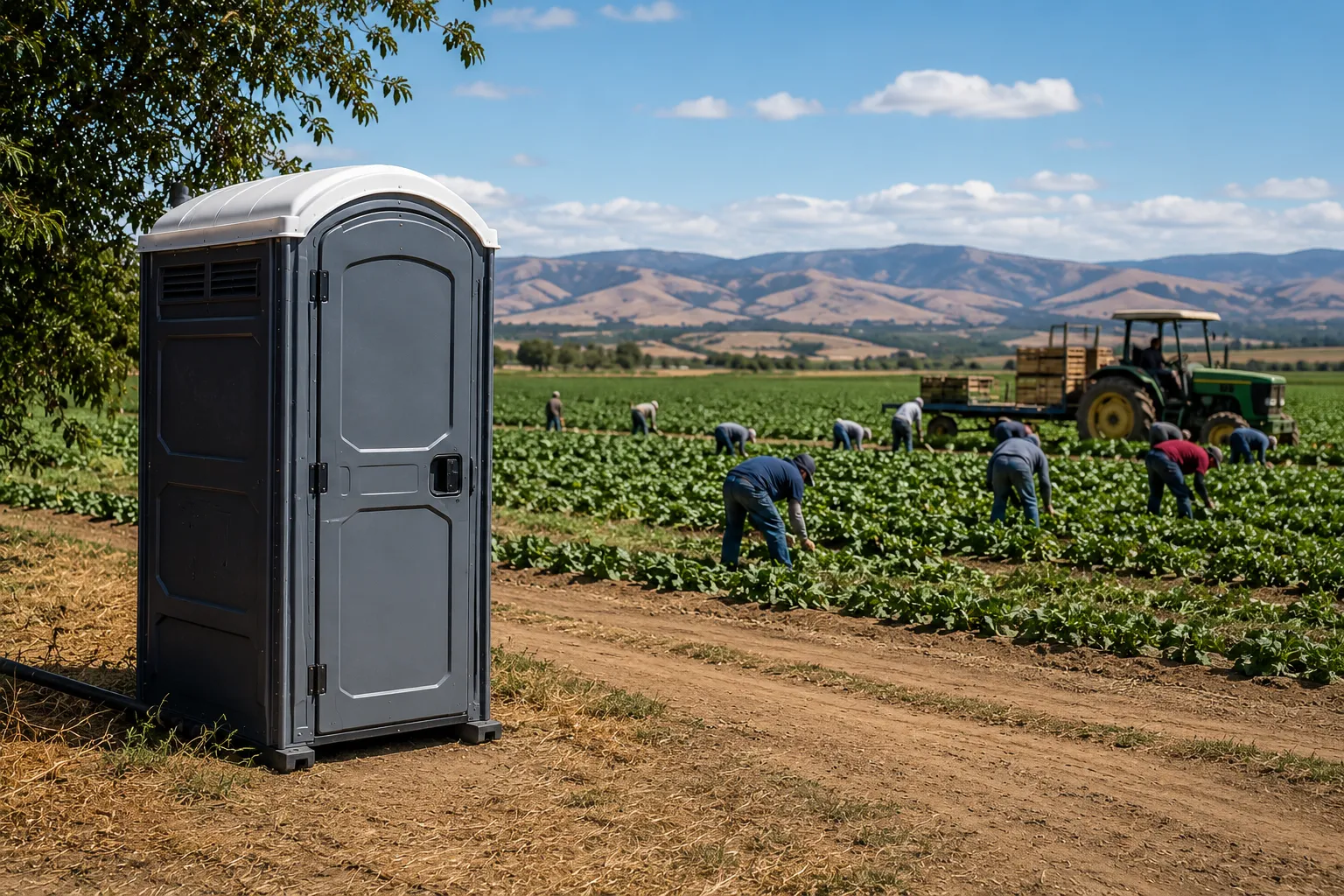
Field sanitation rules don't work like a construction site. OSHA 1928.110 covers hand-labor agricultural operations and sets the bar at one toilet and handwashing setup per 20 employees, and it has to sit within a quarter mile of wherever people are actually working. That's different from OSHA 1926.51(c), which governs construction crews and scales by worker count in bigger steps. If your operation runs both, harvest crews in the field and a packing shed crew nearby, you may need two different counts under two different rules. Gilroy Porta Pros walks the property first, because a 40-acre block of row crops near San Martin, 7.8 miles north of Gilroy, moves restrooms differently than a compact orchard closer to town. We also account for shift overlap. If crews rotate at midday, a single standard porta potty rental might need to become two units so nobody's walking a half mile back at lunch. For crews spread across multiple fields, we sometimes split coverage between a porta john rental at the near field and a second unit staged farther out, connected by a service route our driver runs on the same day. Pricing for a standard unit on a weekly basis sits in the $130 to $500 range depending on service frequency and distance, and you can see the full breakdown on our porta potty rental cost page.
What Do Farm Restrooms Need Besides a Toilet?
Water. Field sanitation isn't just a toilet in a field, it's potable water too. OSHA 1926.51(a)(1) requires an adequate supply of potable water at any place of employment, and 1928.110 folds that same requirement into agricultural field sanitation specifically, alongside handwashing. That means a handwashing station rental or a portable sink rental parked next to the toilet, not somewhere else on the property. Under 29 CFR 1910.141(d)(2), handwashing setups need soap and a way to dry hands, a towel dispenser or a hand-drying device. Sanitizer alone doesn't satisfy that. If your crew handles pesticide application or crop treatment, that changes the picture again: OSHA 1926.51(f)(1) requires washing facilities where workers are applying paints, coatings, herbicides or insecticides, since residue on skin is a real exposure risk. We stage those stations right at the mixing or loading area, not back at the barn. For a labor camp or a longer harvest season, some Gilroy operations lease a unit monthly instead of re-booking every few weeks; our monthly porta potty rental page covers that math, and a standard unit on a month-long term runs $125 to $325 depending on unit count and service interval.
Where Should Units Sit on a Working Farm?
Firm ground, clear access, and close enough that nobody skips the walk. A unit that's parked in soft soil after irrigation becomes a unit nobody uses, and a unit that's a half mile from the picking rows gets the same treatment. Our porta potty placement guide covers ground conditions in more depth, but on farmland the two biggest factors are drainage and truck access for our pump-out route. A standard unit runs about 44 by 48 inches on the ground and stands roughly 92 inches tall, small enough to tuck at a field edge without blocking equipment lanes. If your operation also runs a farm stand or agritourism event, that's a different sanitation load entirely, closer to what we plan for county fair restrooms or festival restroom rental than field labor, and it may call for an ADA accessible porta potty since ADA Standards section 213.2 requires at least 5 percent of clustered single-user units to be accessible whenever the public is invited on-site. We also handle septic needs for farmhouses and packing facilities directly, from septic pumping service to grease trap pumping for any on-site kitchen or processing area, and a typical 1,000 gallon residential-style tank gets pumped every 3 to 5 years depending on household or facility size.
Do you service farms outside Gilroy city limits?
Yes. We run routes to agricultural properties around Gilroy, including growers near Morgan Hill, 11.6 miles north, and Hollister, 16.6 miles southeast. Check service areas for coverage, or request a route check directly through contact.
Can one unit cover two separate fields?
Sometimes, but only if both fields sit within OSHA 1928.110's quarter mile walk requirement from where crews are working. If they don't, you need a second unit. We map this during the site walk before quoting.
How often does field sanitation get serviced?
Weekly is standard under ANSI/PSAI Z4.3 for typical usage, but harvest-season crews often need twice weekly service. We adjust the route once we know your crew size and shift schedule.
What if my crew also handles pesticide application?
That triggers OSHA 1926.51(f)(1), which requires washing facilities wherever herbicides or insecticides are applied. We place a dedicated handwash station at the mixing or loading site, separate from the field toilet.
Do you offer short-term rentals for seasonal harvest crews?
Yes. Many growers rent weekly through harvest and return the units after. See porta potty rental per day for shorter jobs, or request a quote for a harvest-length rental plan.
Next step
Get a delivery date
Tell us the address, the dates and the headcount. We size the order and confirm the route.