
How many porta potties does a race need?
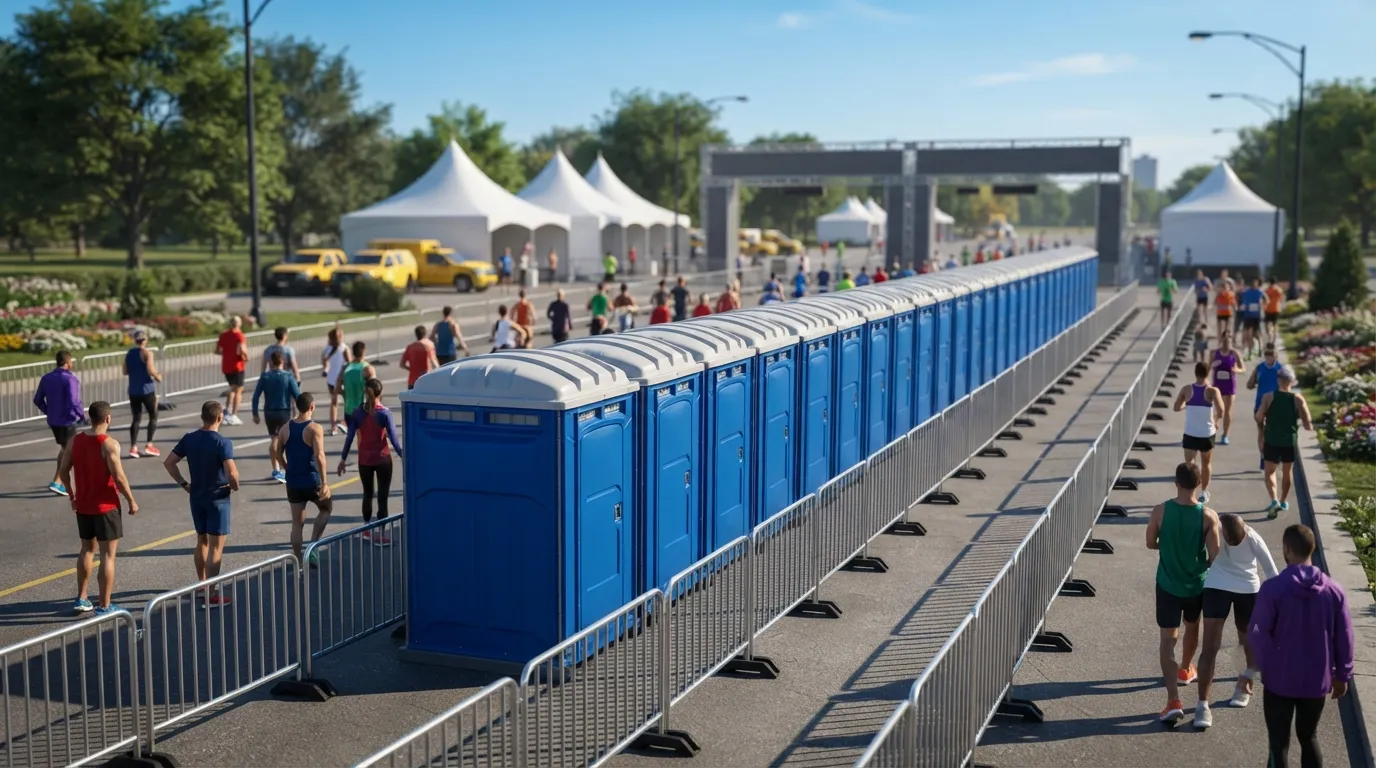
Start with the crowd, then split it by location. A finish line with food trucks and family waiting holds people longer than a mid-course water stop, so it needs more units per runner. Our sizing guide walks through the math, but the short version: cluster most units at start and finish, drop a few at each aid station, and add ADA accessible porta potty units to every cluster. ADA Standards section 213.2 requires at least 5 percent of clustered single-user units to be accessible, never fewer than one per cluster, and a 60 inch turning circle under section 304.3.1 matters wherever a wheelchair user has to pull up and turn. If your course runs a Gilroy-to-Morgan Hill route, remember Morgan Hill sits 11.6 miles north, which usually means a second delivery stop rather than trucking everyone from one lot. Big fields also lean on standard porta potty rental for volume and a couple of deluxe flushable porta potty units near the VIP or sponsor tent. For a course finishing near a Gilroy park or fairgrounds, pair restrooms with temporary fence rental to keep runners funneled and spectators off the chute, and stage a handwashing station rental by any food service area.
Why do race organizers need a temporary power pole?
Timing mats, PA systems and finish-line video boards all need real power, and a generator alone often can't reach every point on a spread-out course. A temporary power pole gives you a fixed 120/240 volt tap point instead of running extension cords across a runner's path, which is both a trip hazard and a headache for your safety marshals. Here's how to brace a temporary power pole before race day: dig or auger the base footing deep enough for the pole height, set it plumb, backfill and tamp in lifts rather than dumping loose soil, and guy or brace it at the top if it's freestanding rather than mounted to a structure. Check it again the morning of the race, since a pole that shifted overnight under a loose backfill is worse than no pole at all. Pair it with a light tower rental if your race starts before sunrise, which is common for summer Gilroy courses trying to beat the heat. GFCI protection matters here too. OSHA 1926.404(b)(1)(ii) calls for ground fault circuit interrupter protection on temporary power circuits, which matters when timing equipment and misted water stations sit near the same outlets. If your course crosses onto a farm road near San Martin, 7.8 miles north of Gilroy, factor that extra drive into your delivery window when you book both the power pole and the restroom trailer.
Where should restrooms go on a race course?
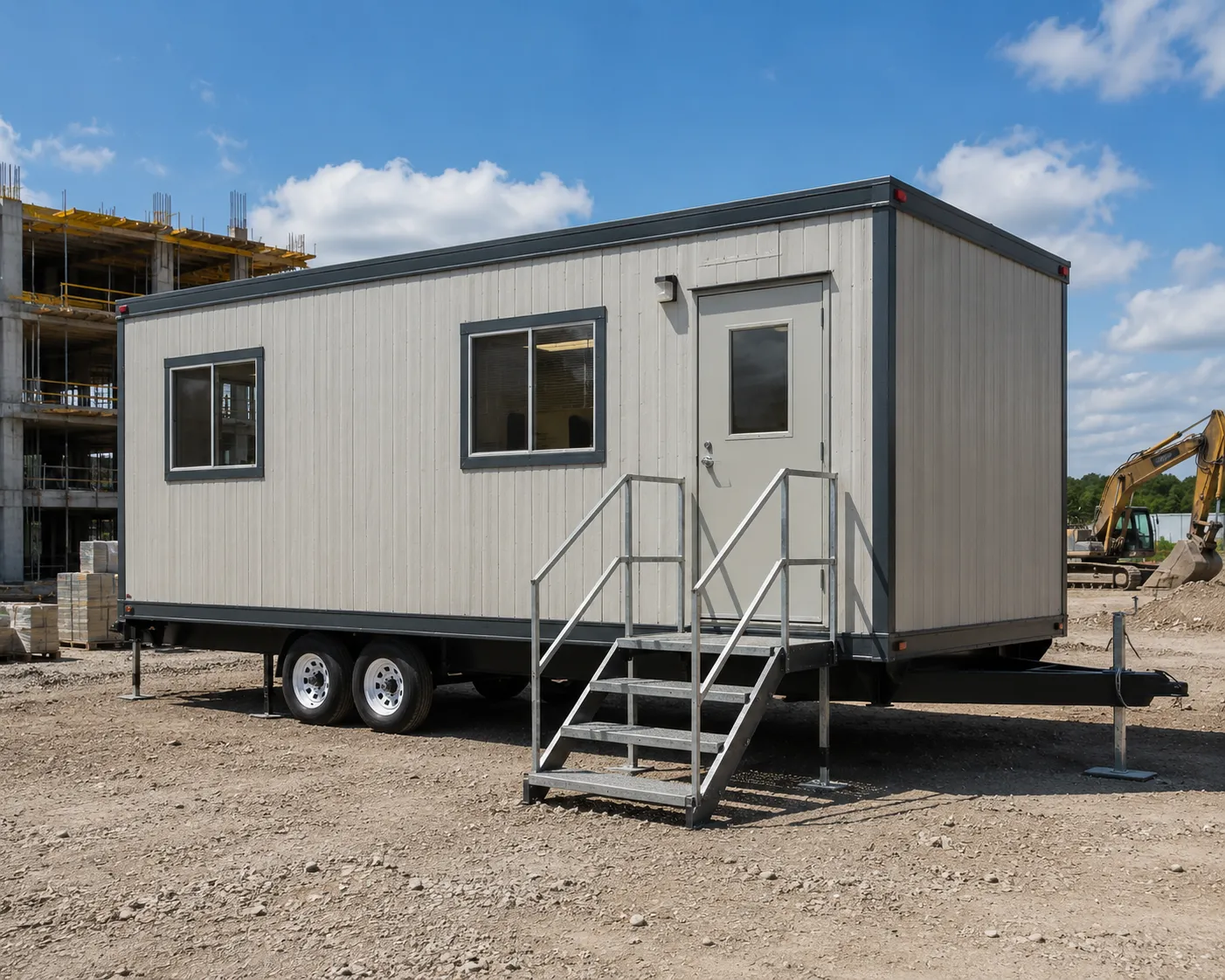
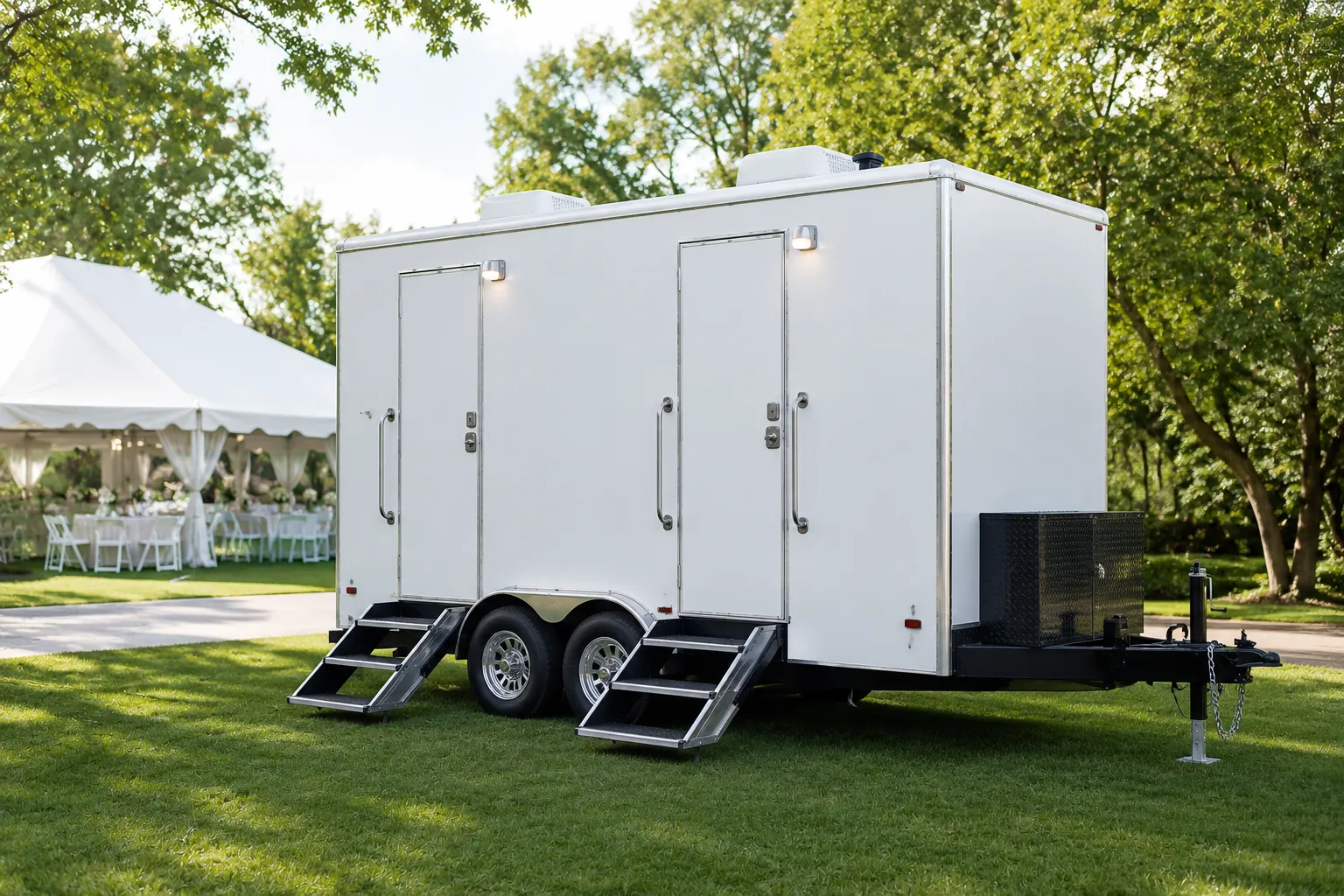
Restrooms belong at the start corral, every aid station, and the finish chute, set back far enough from the running lane that a line doesn't spill into traffic. OSHA 1926.51(c) sets toilet ratios by worker count on construction sites, and while a race isn't a job site, the same logic of matching facility count to expected crowd density holds. A 44 by 48 inch standard unit needs a stable, level pad, and ADA Standards section 302.1 calls for surfaces that are stable, firm and slip resistant, which rules out soft turf or loose gravel for any accessible unit. Keep a 36 inch clear path per ADA Standards section 403.5.1 to every unit, especially across grass or gravel lots where wheelchair users need a real route, not just a gap between cones. For big finish-line crowds, a restroom trailer rental or 4 stall restroom trailer handles higher volume with less servicing mid-event than a bank of standard units. If your race draws a Hollister crowd, that's a 16.6 mile drive southeast, worth flagging when you schedule delivery and pickup times with Gilroy Porta Pros.
Race Restroom Pricing
| unit | day | weekend | week |
|---|---|---|---|
| standard | $100-$350 | $125-$400 | $130-$500 |
| ada | $200-$400 | $199-$300 | $240-$240 |
| trailer | $175-$2500 | $900-$3000 | $1650-$1650 |
Most single-day races book the day rate, while multi-day festivals or stage races often land closer to the week column. See porta potty rental cost or restroom trailer rental cost for a fuller breakdown by unit type.
How far in advance should I book race restrooms?
Book as soon as your course map and expected field size are set, ideally weeks out for a large Gilroy race. Units, trailers and power poles all need delivery scheduling, and popular race weekends fill fast. Use request a quote once you know your headcount.
Do I need ADA units even for a small local 5K?
Yes. ADA Standards section 213.2 requires at least one accessible unit per cluster regardless of race size. Check ADA restroom requirements for placement details, including door clearance and reach ranges.
Can I get restrooms delivered to multiple points on the course?
Yes, most races split delivery across start, aid stations and finish. Gilroy Porta Pros routes trucks by cluster rather than one central drop. See porta potty placement guide for spacing advice.
What happens if my race runs long and units need servicing mid-event?
Flag it when booking so a service truck is staged nearby rather than off-site. Standard units hold 60 to 70 gallons, which usually covers a single race day without mid-event service.
Should I add handwashing stations near food vendors?
Yes. 29 CFR 1910.141(d)(2) requires soap and towels or a hand-drying device at washing facilities, and hand sanitizer alone doesn't satisfy that. A handwashing station rental near vendor rows covers it.
Next step
Get a delivery date
Tell us the address, the dates and the headcount. We size the order and confirm the route.