
How many restrooms does a festival actually need?
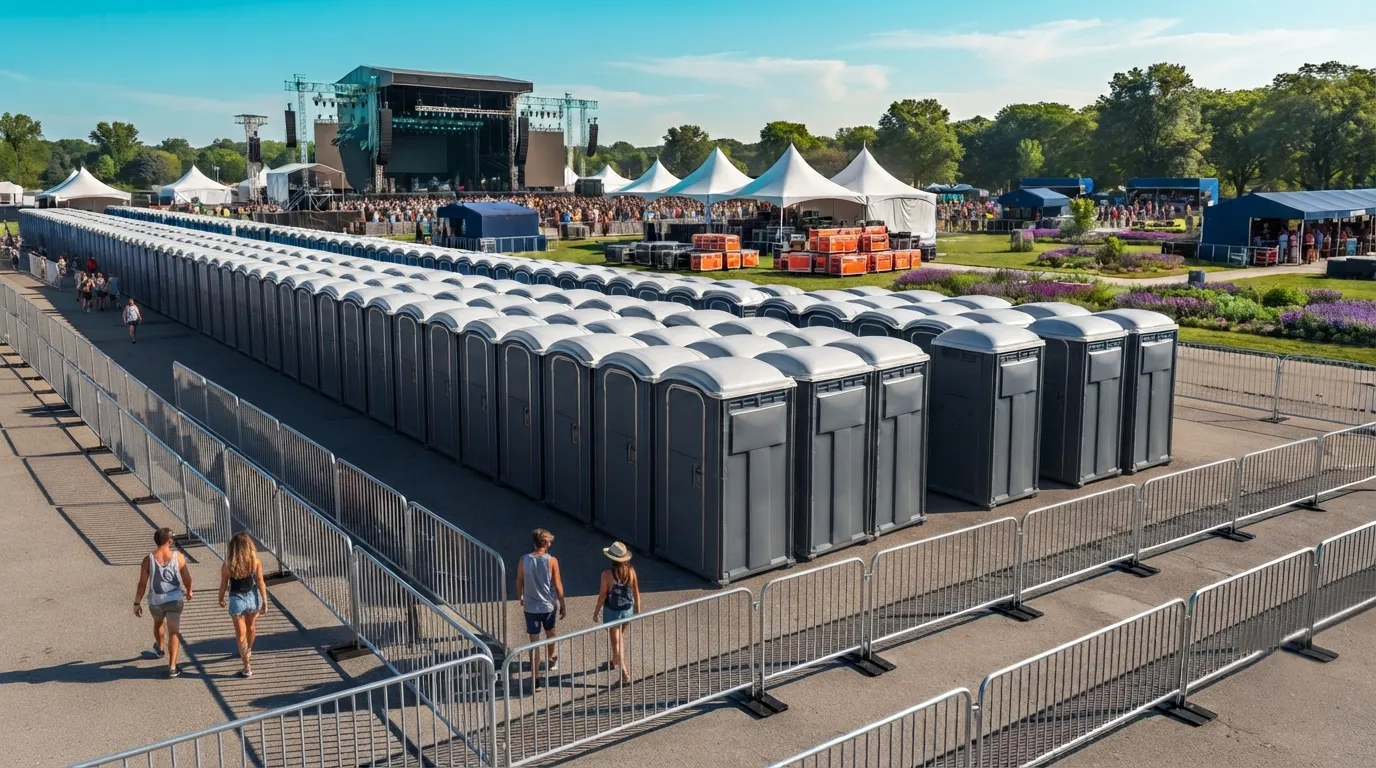
Start with headcount, then adjust for beer sales, heat and how long people stay on site. OSHA 1926.51(c) sets the construction ratio at one toilet per 20 workers, and while that rule covers job sites, not festival crowds, event planners in Gilroy use a similar logic: more units when people are standing around drinking for six hours, fewer if it's a two-hour ceremony crowd that moves through in waves. A standard porta potty rental handles general foot traffic, while a deluxe flushable porta potty fits VIP areas or sponsor tents where people expect more than a hole and a hand sanitizer pump. Every festival cluster also needs an accessible unit under ADA Standards section 304.3.1, which requires a 60 inch turning circle inside the stall, and a route to it at least 36 inches wide per ADA Standards section 403.5.1. If your event pulls from Morgan Hill, 11.6 miles north, or San Martin, 7.8 miles north, plan for cars parking further out and people walking longer distances between the lot and the restroom bank, which pushes usage per unit higher than a tight urban footprint would. Not sure on the math? Our guide on how many porta potties you need walks through headcount, duration and alcohol service together instead of treating them as separate questions.
What restroom options work for a Gilroy festival?
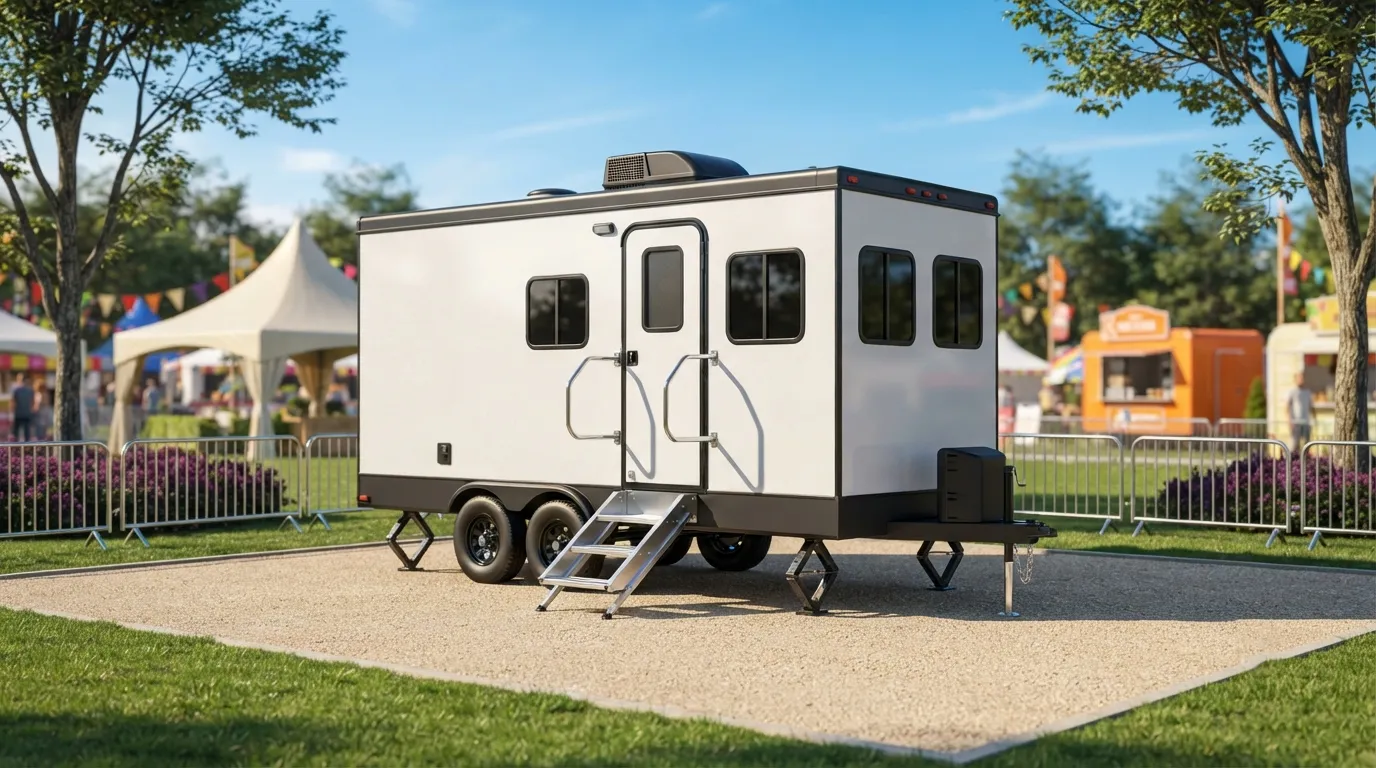
Mixing unit types by zone works better than dropping the same restroom everywhere. Put standard units along the main midway, a restroom trailer near the stage or VIP zone, and a handwashing station next to every food vendor row, since 29 CFR 1910.141(d)(2) requires soap and towels or a hand dryer at washing stations, not sanitizer alone. A 2 stall restroom trailer suits a smaller acoustic stage or wine garden, while an 8 stall restroom trailer covers a headliner crowd without a long line building during set changes. If your festival serves food, a portable sink rental at each booth keeps vendors compliant without routing everyone back to the main restroom bank. Here's how the common event options compare:
| unit | duration | typical price |
|---|---|---|
| standard | event | $400 |
| standard | weekend | $250 |
| ada | weekend | $240 |
| trailer | weekend | $2,000 |
| trailer | event | $3,500 |
| dumpster | weekend | $440 |
Layout matters as much as count. A standard unit sits about 44 by 48 inches on the ground and stands roughly 92 inches tall, so tight footprints near stages or vendor rows need a real walkthrough before delivery day, not a guess from a site map. Temporary fencing around the restroom cluster keeps foot traffic organized and stops units from getting boxed in by generator cable or vendor tents. For multi-day festivals, pair restrooms with a roll-off dumpster rental sized to your vendor count, since food booths generate more trash volume than most planners budget for on day one.
Why does placement matter more at a festival than a job site?
Because festival crowds move in bursts, not steady shifts. A construction crew uses restrooms at fairly even intervals across an 8 hour day, but a festival sees everyone leave the stage area at once between sets, then nothing for twenty minutes. Illumination matters too if your event runs past dusk: OSHA 1926.56(a) sets minimum lighting intensities for work areas, and pairing a light tower rental with your restroom bank keeps the path safe once the sun drops. Ground surface counts as well. ADA Standards section 302.1 requires stable, firm, slip resistant surfaces at accessible units, which matters on the grass lots and gravel overflow parking common at Gilroy festival sites. If your event draws from Hollister, 16.6 miles southeast, or Watsonville, 18.8 miles southwest, build in extra buffer time for delivery trucks, since a roll-off or trailer drop needs about 60 feet of straight clearance behind the vehicle. Gilroy Porta Pros walks the site before the event, not the week of, so nobody discovers a low branch or a soft shoulder on delivery morning.
How far in advance should I book festival restrooms?
Book 4 to 8 weeks out for anything over 300 attendees, since trailers and ADA units book first during peak festival season. Smaller single-day events can move faster. Check our event restroom rental page for a rundown of what typically fills up quickest.
Can I rent restroom trailers instead of standard units for an outdoor festival?
Yes, and many festivals mix both. A luxury restroom trailer works well for VIP or sponsor areas, while standard units cover general admission at lower cost per user.
Do festivals need a handwashing station separate from the restrooms?
Yes, especially near food vendors. OSHA 1926.51(f)(1) requires washing facilities where workers apply paints, coatings, herbicides or insecticides, and food booths handling raw ingredients should have a dedicated station regardless.
What happens if a unit runs out of capacity mid-event?
Call for a service run. A 60 to 70 gallon tank handles steady traffic, but a surge crowd can fill one faster than expected, and same-day pump-outs keep the line moving.
Does Gilroy require a permit for festival restroom placement?
Placement in public right of way or park space needs confirming with the city. See our porta potty permit requirements page before finalizing your site plan.
Next step
Get a delivery date
Tell us the address, the dates and the headcount. We size the order and confirm the route.